

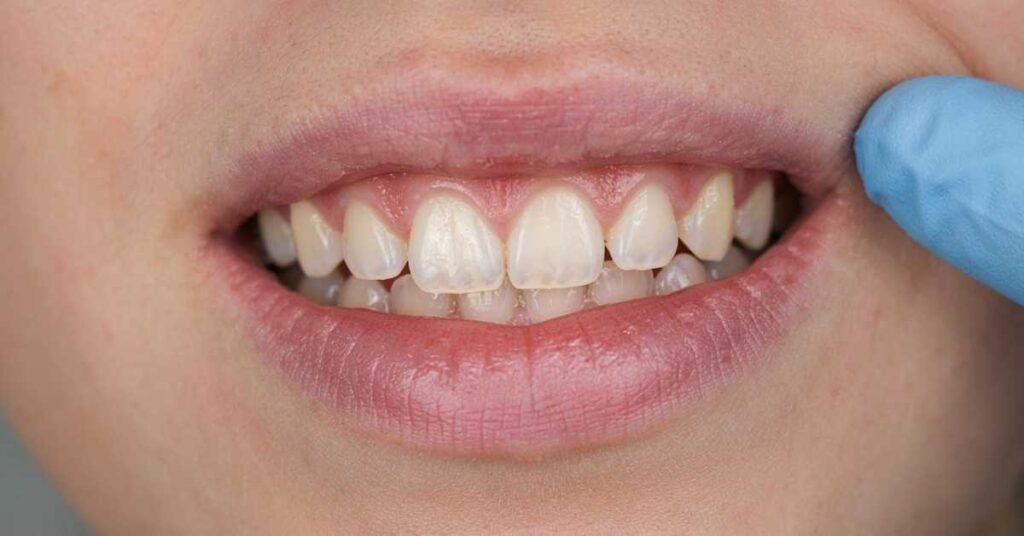
You’re brushing one morning and notice a tooth looks longer than it did last year. Or a cold drink gives you a quick zing you never used to feel. So you search “when is gum recession a problem” and end up more confused than before.
Here is the plain answer. Gum recession is a problem when it keeps getting worse, when it hurts, or when it comes with bleeding, swelling, or a loose tooth. A small change that has sat still for years is a different story.
What is actually happening
Gum recession means the gum pulls back from the tooth and shows more of it, sometimes down to the root. The gums should cover the tooth roots and help protect them from damage and sensitivity. Once the root is open, hot and cold bother it more, and bacteria get an easier way in. Gums also don’t grow back by themselves, which is why it’s worth catching early.
When does gum recession become a problem?
Most people notice sensitivity first. If you can run a fingernail across the gum line and feel a notch, that’s another sign the root is exposed. Teeth that look longer than they used to, gums that bleed when you brush, and bad breath that won’t leave are the other usual ones.
If you notice one or two of these symptoms, schedule a dental appointment rather than panic.
Gum recession: when to worry
People often ask me where the line is, so here is a simple way to think about it. If the change is small, painless, and has looked the same for years, you can usually keep an eye on it. If it’s new, moving fast, showing up on several teeth at once, or coming with pus or a loose tooth, don’t wait. Those can point to gum disease, and gum disease doesn’t fix itself with time.
Why it happens
Brushing too hard is the most common cause, especially with a stiff brush. Gum disease is the second big one, because it eats away at the gum and the bone underneath. Grinding your teeth at night, thin gum tissue that runs in the family, smoking, and teeth that sit slightly crooked can all play a part too. Often it’s a mix, which is why your dentist needs to look before guessing.
Worried about a gum recession? Start here
If you’re concerned about gum recession and your dental appointment is a few days away, use a soft-bristled toothbrush and brush gently in circular motions instead of scrubbing. Floss every day, but ease it in rather than snapping it down. A toothpaste for sensitive teeth can take the edge off cold drinks. If you smoke, reducing or quitting is another important step toward protecting your gum health. None of this brings the gum back, but it can stop things from sliding further.
What a dentist can do
The fix depends on the cause. If gum disease is the cause, deep cleaning can remove plaque and tartar beneath the gumline to support healing. If you grind your teeth, a night guard can help protect them from damage. When the recession is more advanced, a gum graft can cover the exposed root using healthy tissue, and your dentist may send you to a specialist for that.
You don’t need a referral to get started, though. Checking your gums is part of regular general dentistry services, so your normal dentist is a fine first stop. If you’re searching for dentists near me on Riverwood Pkwy, pick a team that measures the space around each tooth and tells you what they find in plain words.
When it has gone too far
Sometimes recession is the visible part of advanced gum disease that has destroyed the bone holding a tooth. If that tooth is painful or can’t be saved, ask whether same day extraction in Atlanta is possible, so you aren’t left hurting while you wait. The next step is to explore options for replacing the missing tooth. If several teeth are missing, dentures in Atlanta GA can bring back your chewing and your smile. The aim is always to keep your natural teeth when that’s realistic, and to give you a comfortable plan when it isn’t.
Conclusion
Gum recession isn’t always an emergency, but it shouldn’t be ignored either. It becomes a problem when it grows, causes sensitivity, or shows up with bleeding, swelling, or a loose tooth. Soft brushing, regular cleanings, and an early checkup go a long way. If you’ve been wondering when to worry about gum recession, a quick exam will tell you where you stand. The Riverwood Dental team can assess your gum health and explain the treatment options that may be right for you.
FAQ
1. Can gum recession grow back?
No, gum tissue doesn’t regrow on its own. Treatment can stop it from getting worse, and a gum graft can rebuild lost tissue in some cases.
2. Does Gum Recession Always Indicate Gum Disease?
No. Hard brushing, grinding, and thin gums can cause it too. A dentist can tell which one applies to you.
3. How do I know if my gum recession is serious?
Tooth pain, bleeding gums, bad breath, a notch near the gum line, or a loose tooth all mean you should be seen soon.
4. Does gum recession cause sensitivity?
Yes. Once the root is exposed, hot, cold, and sweet things can cause a quick sharp pain.
5. Can I treat gum recession at home?
Soft brushing and daily flossing can slow it down, but they can’t reverse it. A dental examination is the most effective way to identify the underlying cause.
About the Author
Dr. Amit Morar is a dentist at Riverwood Dental in Atlanta, Georgia. He earned his Biology degree from the University of Georgia and completed dental training at Touro College of Dental Medicine. A member of the American Dental Association, he stays updated on modern dental techniques. Outside work, he enjoys sports, traveling with his wife, and exploring Atlanta restaurants.
3350 Riverwood Pkwy #2120
Atlanta, GA 30339
Phone: 770-955-2505
Email: staff@riverwooddental.com


